Open for funding · development proofPabna · first site to confirm
Biochar Field
What is actually left after harvest?
The opportunity starts with residue that is genuinely available, can be converted consistently and creates enough value in the field to earn repeat use.
Discuss development fundingScale is visible. Supply decides the case.
Pabna's crop base makes it a practical place to test feedstock supply, logistics and farmer demand.
Bangladesh Bureau of Statistics · Yearbook of Agricultural Statistics 2025 · Pabna 2024–25: rice = Total Aus + Total Aman + Total Boro; maize = Rabi + Kharif; jute converted from reported bales at 181.43 kg per bale.
Abundance is not availability.
A viable feedstock needs reliable seasonal volume, workable condition and a delivered cost that holds without displacing better existing uses.
The best feedstock is genuinely surplus and economical to collect.
What does one batch need to prove?
Four questions shape the investment case.

Is it really available?
- Current use and existing value
- Ownership and seasonal volume
- Condition and delivered collection cost
- Traceable source
A viable supply needs traceable ownership, usable volume and a delivered cost that works.
Can we make it consistently?
- Batch yield
- Moisture and ash
- Contaminants
- Organic carbon / H:Corg where required
Consistent quality and yield determine whether production is worth repeating.
Is it worth putting into soil?
- Raw biochar vs biochar-compost blend
- Application and handling cost
- Field response
- Willingness to pay and repeat demand
Field value has to justify the cost of application.
What removal can actually be verified?
- Eligible feedstock record
- Production and batch record
- Transport and process emissions
- Documented final end use
Carbon value depends on eligible feedstock, complete records and verified net removal.
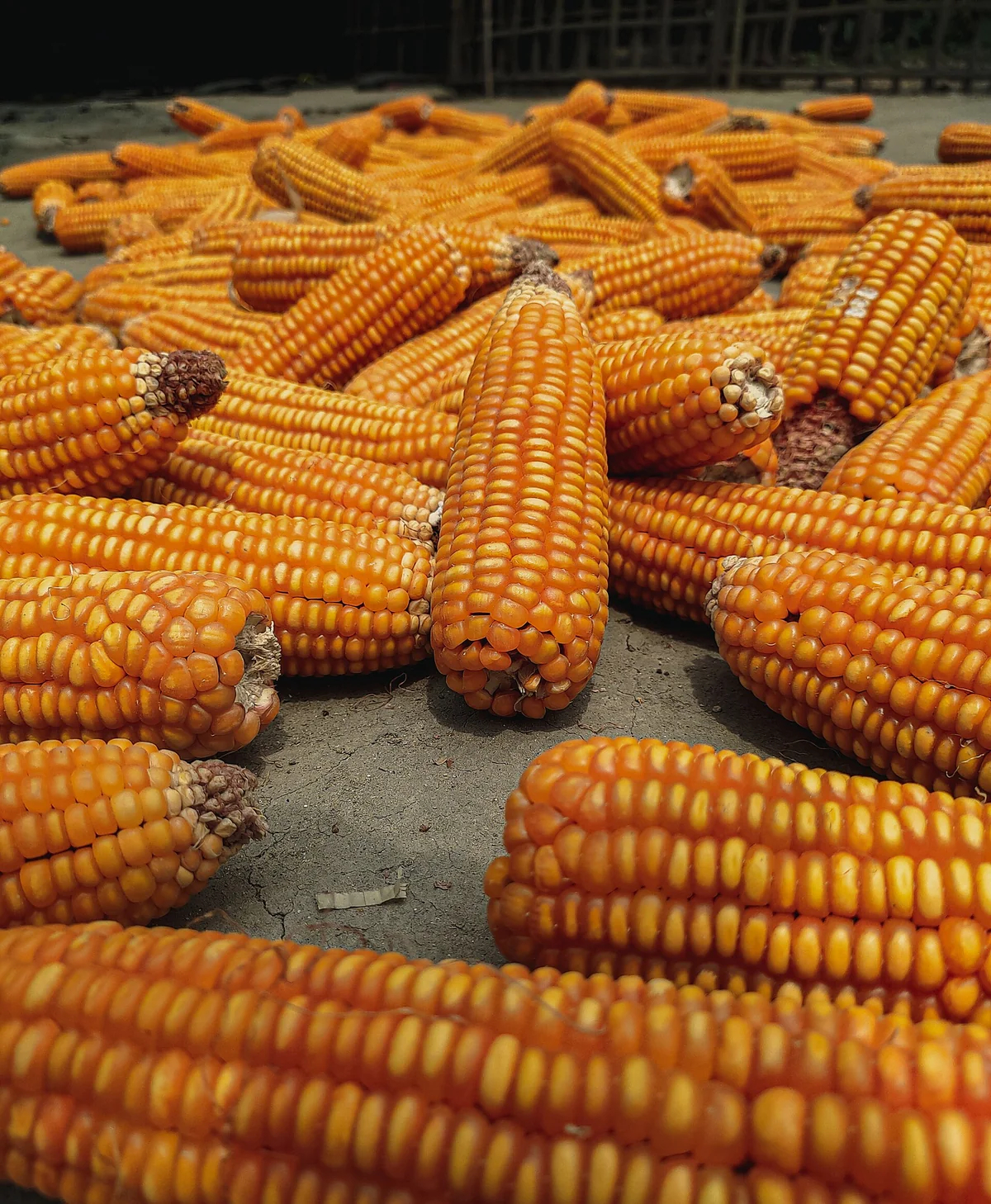
Corn-cob storage · Nenad Stojković / Wikimedia Commons.
Does it work in the field and in the market?
Field response and delivered application cost determine whether the product earns repeat use.
Bangladesh biochar research ↗Physical economics first. Carbon upside second.
That cost is tested against willingness to pay, repeat demand or a credible offtake route.
From diligence to operating evidence.
Funding covers the work needed to identify viable feedstock, confirm the site, select equipment and test demand before scale.
- Feedstock pack
Available volume, competing use and delivered cost.
- Site + approvals pack
Preferred site, fallback and clearance path.
- Procurement pack
Comparable equipment offers and recommendation.
- Proof pack
Field protocol, prospective users and carbon pre-screen.
If the case supports investment
- Commissioned line
Controlled production with safety and batch records.
- Operating record
One season of feedstock, process and yield evidence.
- Field + market evidence
Application cost, field response and repeat demand.
- Scale decision pack
A clear recommendation on whether and how to scale.
What has to be true for scale?
- Feedstock is genuinely surplus and economical to collect.
- The site clears environmental and operating requirements.
- Equipment meets safety and emissions standards.
- Field response justifies delivered application cost.
- Users show repeat demand.
- Any carbon claim meets the chosen methodology.
Fund the development phase.
Identify viable feedstock, confirm the site, select equipment and test field demand before scale. Final costing follows site and vendor diligence.
Evidence base
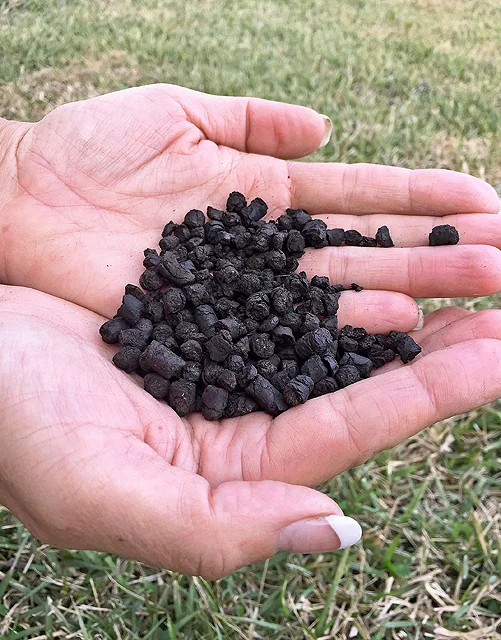
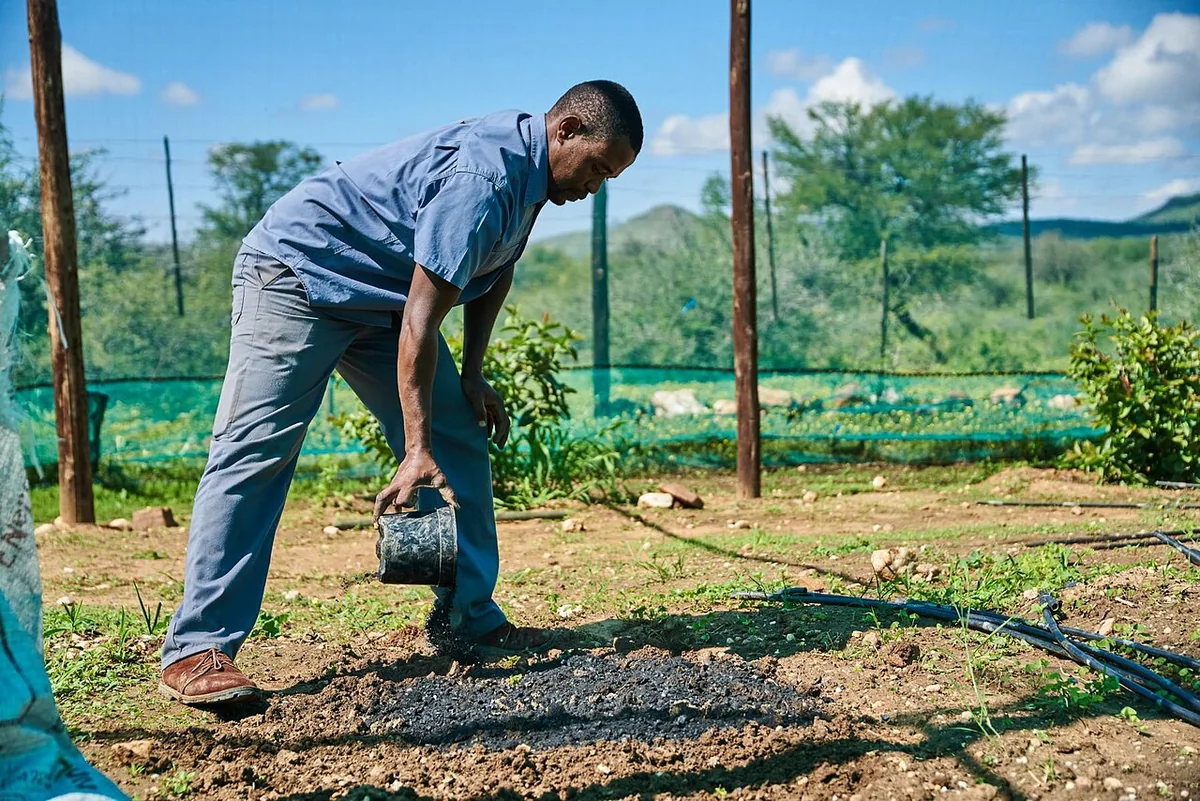
Image credits: corn-cob storage · Nenad Stojković / Wikimedia Commons; biochar material · Sophia Wojkowski / USDA ARS; field application · GIZ / Tim Brunauer / Wikimedia Commons; maize field · Kurigram · contextual image only, not evidence of biochar application.