Recent research examines heatwaves and drought alongside soil-moisture and groundwater pressure across the Barind.
Environmental Earth Sciences ↗Know itbefore youmove it.
What makes a harvest ready begins before the crop is cut.
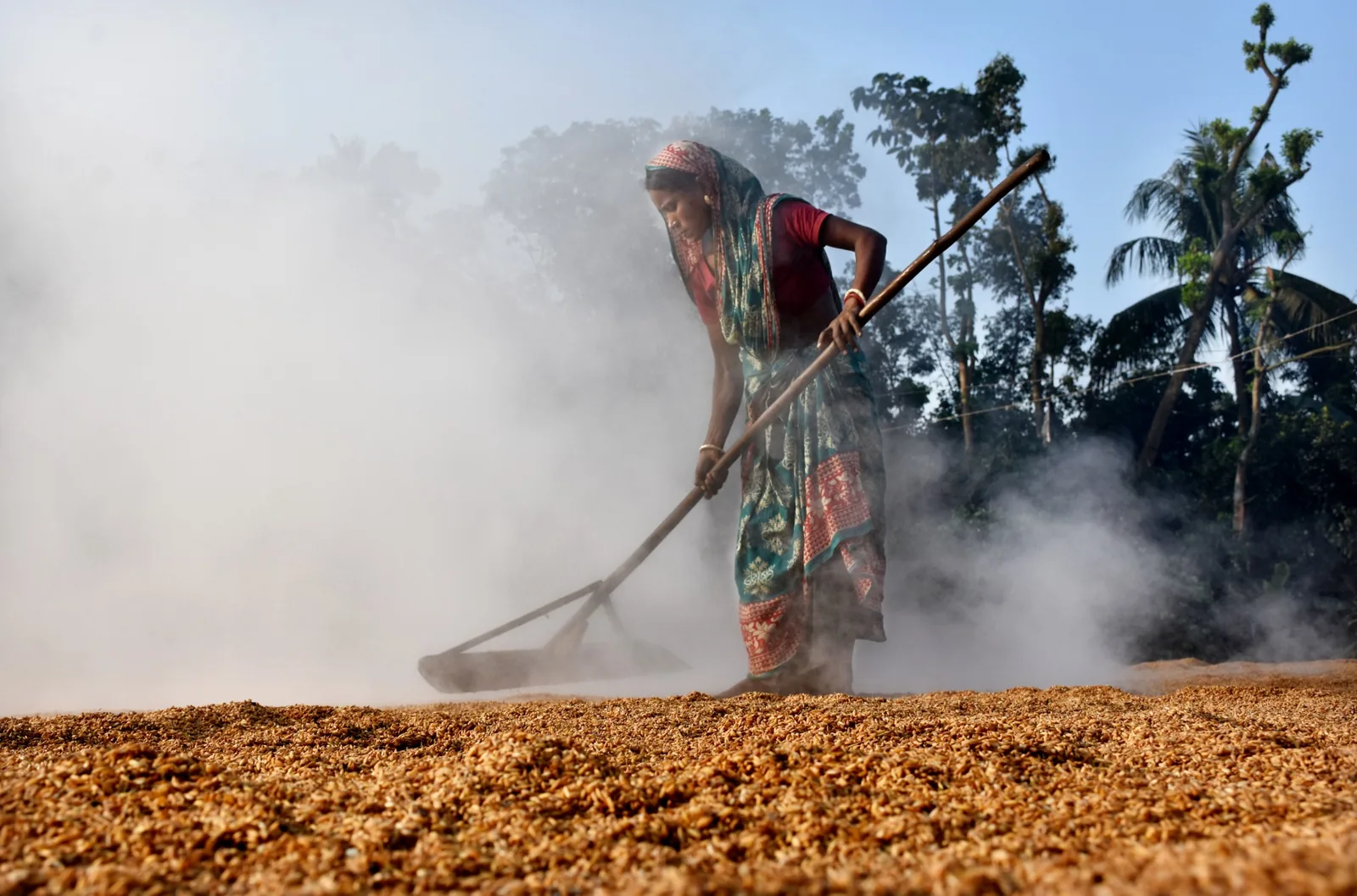
Request the Harvest Ready briefDocumentary context, Bangladesh · Mohammad Shajahan / Wikimedia Commons, CC BY-SA 4.0 · Not a project beneficiary
Northwest Bangladesh
Heat. Water.Weather.One farming year.
Naogaon, Bogra and Rangpur are the first candidate areas. Public evidence points to heat, drought and water stress across the northwest. Cultivera Crop Intelligence shows the scale of the rice economy those risks sit inside.
Rangpur · Bogra · Naogaon
Cultivera Atlas geometry · candidate areas, not project sitesUNDP and BMDA are expanding water security and climate-smart irrigation in drought-prone Sapahar and Mohadevpur.
UNDP + BMDA ↗Cultivera Insights · Crop IntelligenceRice · 2024–25
Recorded annual rice production, Aus + Aman + Boro. District context only.
Naogaon1.72m t
Bogra1.29m t
Rangpur1.25m t
Open the three-district rice record →
Three villages · one farming year
Four responses, connected by the field.
Heat reaches the person. Water reaches the crop. Organic matter goes back to the soil. Weather still matters after the grain is cut.
Three heat-safe field points
Shade, drinking water and a place to stop during the hottest part of field work.
Shared solar irrigation + field water management
One solar irrigation service, 30 field-water tubes and a public irrigation schedule.
Three village compost systems
Local organic material returned to the field, with 12 application demonstrations.
Moisture + weather protection
Moisture checks, handling kits, rain-response equipment and targeted drying improvements.
Programme at a glance
Three adjacent villages · 150–200 farming households · 18 months.
Water + solar
Water when the crop needs it.
One shared solar irrigation system will serve its surveyed command area. Alternate Wetting and Drying (AWD) field tubes make water levels visible before the next irrigation decision.

Shared assetOne solar irrigation system
Provisional 5.5–7.5 kW range. Final rating follows the water-source, head and command-area survey.
Field practice30 AWD water tubes
Field water levels become visible before the next irrigation decision is made.
Community usePublic schedule + use register
One operator and deputy manage a published schedule, with maintenance responsibility recorded locally.
Bangladesh already uses solar irrigation at scale. IDCOL reports 1,495 systems serving around 70,000 farmers; recent IWMI work keeps groundwater management central to scale-up. IDCOL ↗ IWMI ↗
Heat
A place to stop when the field becomes too hot.
One heat-safe field point in each village, with effective shade, drinking water, seating and basic heat information.
ILO guidance for agricultural workers recommends shaded breaks and reliable hydration during extreme heat. ILO ↗
Soil
Put useful organic matter back into the field.
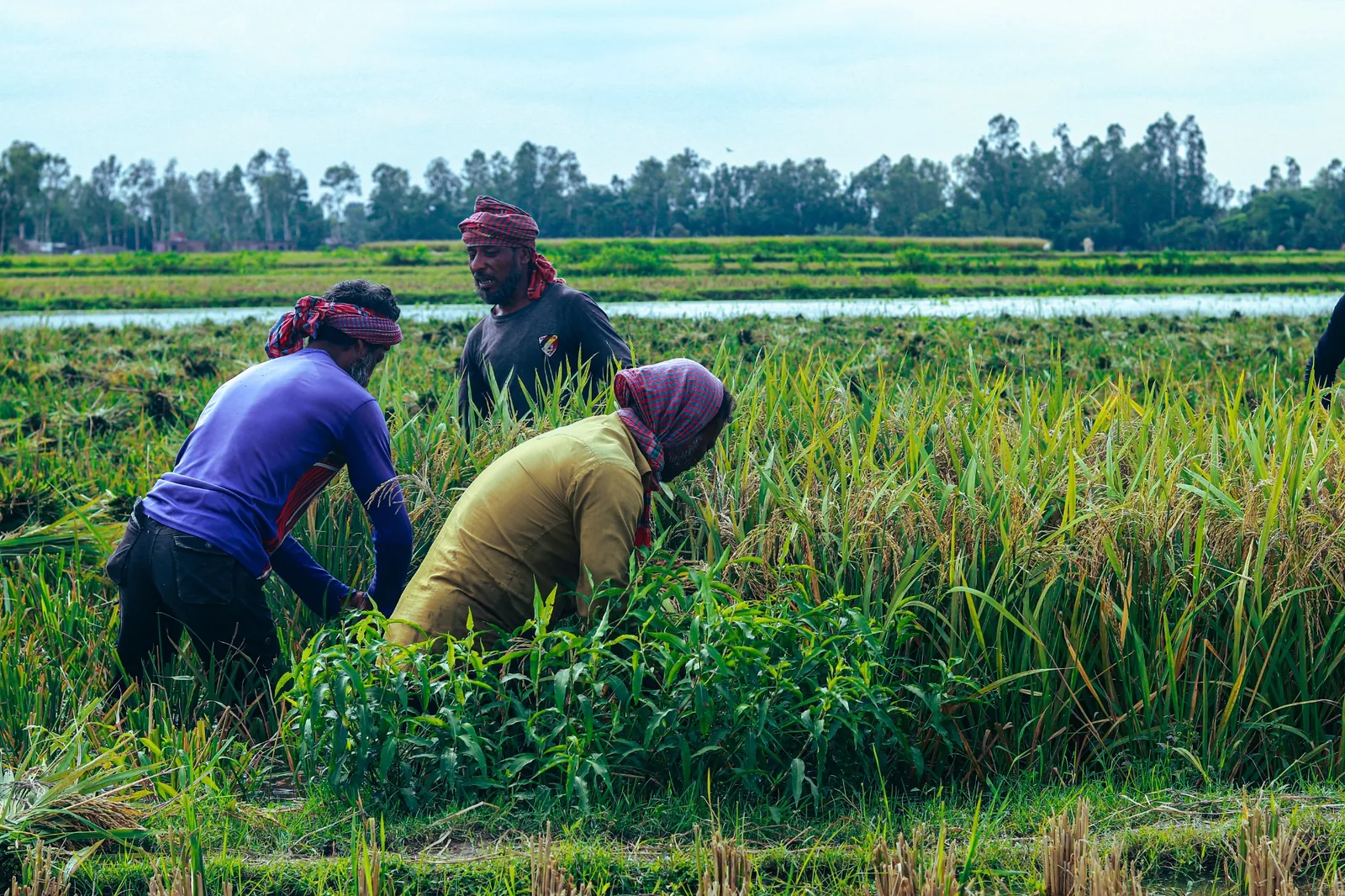
Three village compost systems or locally equivalent cluster units will turn available crop residues, manure and suitable organic material into compost that is actually applied.
01Crop residue + manure
Material already available around farms and households.
02Three compost systems
Covered staging, turning and simple checks before use.
0312 field demonstrations
At least four per village, tied to actual application.
FAO documentation from northwest Bangladesh links compost use with improved soil structure, infiltration and moisture retention under drought stress. FAO ↗

Harvest adaptation
11:20Paddy is drying.
Sun, airflow and regular turning are doing the work.
LaterThe weather changes.
The grain may need more time, even as the window to keep it dry gets shorter.
Moisture reading16.8%
Knowing the moisture changes what happens next: keep drying, cover the grain, store it, or move it.
14% is the maximum moisture reference used in government paddy procurement. Other eligibility and quality conditions also apply.
Documentary context, Bangladesh · Azimronnie / Wikimedia Commons, CC BY-SA 4.0 · Not a project site
Delivery
What arrives on the ground.
Each asset or tool has a local use point, custodian or operator.
3
Heat-safe field points
One per village.
1
Shared solar irrigation system
Provisional 5.5–7.5 kW.
30
AWD field-water tubes
Across the cluster.
3
Village compost systems
Or locally equivalent cluster units.
12
Application demonstrations
At least four per village.
6 + 1
Moisture meters
Six field meters + one cluster reference.
3
Handling + weighing kits
With weather-response equipment.
12
Community stewards
Across Heat, Water, Soil and Harvest.
How change will be seen
The project records use, then what changes.
Each system carries a small evidence set. Harvest keeps the deeper paired comparison because moisture, physical grain loss and value need to be separated properly.
HeatUse during hot periods
WaterPumping + irrigation events
SoilCompost applied
HarvestMoisture + loss + value
Harvest proof
Same farmer. Same harvest.
Part follows the farmer's usual drying practice. Another part uses the Harvest Ready improvement.
Usual practice
Harvest Ready
Water removed
Normal moisture loss, kept separate from grain loss.
Grain lost
Physical loss through handling, contamination or exposure.
Value retained
What remains with the household after drying time, labour and cost are counted.
Allocation
Where the money goes.
Percentages show the current programme through the same CSR taxonomy used across Cultivera's project portfolio.
Environment & climate65%
Solar irrigation, water management, soil adaptation and climate stewardship.
Health10%
Heat-safe field points, drinking water and protection during hotter field work.
Education5%
Steward learning, field demonstrations and practical records.
Livelihood20%
Post-harvest drying, handling and moisture assurance that protect farm value.
Primary CSR homeEnvironment & Climate Change Mitigation & Adaptation
Duration18 months
Target reach150–200 farming households
Designed primarily for Bangladesh Bank ECCMA CSR reporting. Final classification and line-level treatment remain with the sponsoring bank. Bangladesh Bank ↗
Kept in the community
Shared assets need people who know them and keep them working.
The operating structure is local: one cross-village committee, named stewards, a solar operator and visible rules for shared equipment.
One Community Adaptation Committee
Representation from all three villages, including women and small and marginal farmers.
Twelve community stewards
Roles across Heat, Water, Soil and Harvest, with overlap where practical.
Solar operator + deputy
Supplier training, public schedule, user register and maintenance checklist.
Assets held locally
Cultivera manages delivery and evidence. Community assets remain with their named local custodians.
Harvest Ready
A stronger harvest begins before the grain moves.
Heat. Water. Soil. Harvest. One climate adaptation programme across three farming communities.
Request the Harvest Ready briefEvidence + image notes
Bangladesh Bank CSR reporting format · UNDP + BMDA climate adaptation in Naogaon · IDCOL solar irrigation · IWMI solar irrigation + groundwater.
ILO heat guidance · FAO compost and moisture retention · IRRI moisture guidance.
Cultivera Crop Intelligence uses BBS Yearbook of Agricultural Statistics 2025 district records. The 2024–25 Rice figures shown in Context are observed annual Aus + Aman + Boro production: Naogaon 1,722,829 t; Bogra 1,290,723 t; Rangpur 1,253,400 t. These are district context, not measurements from Harvest Ready villages.
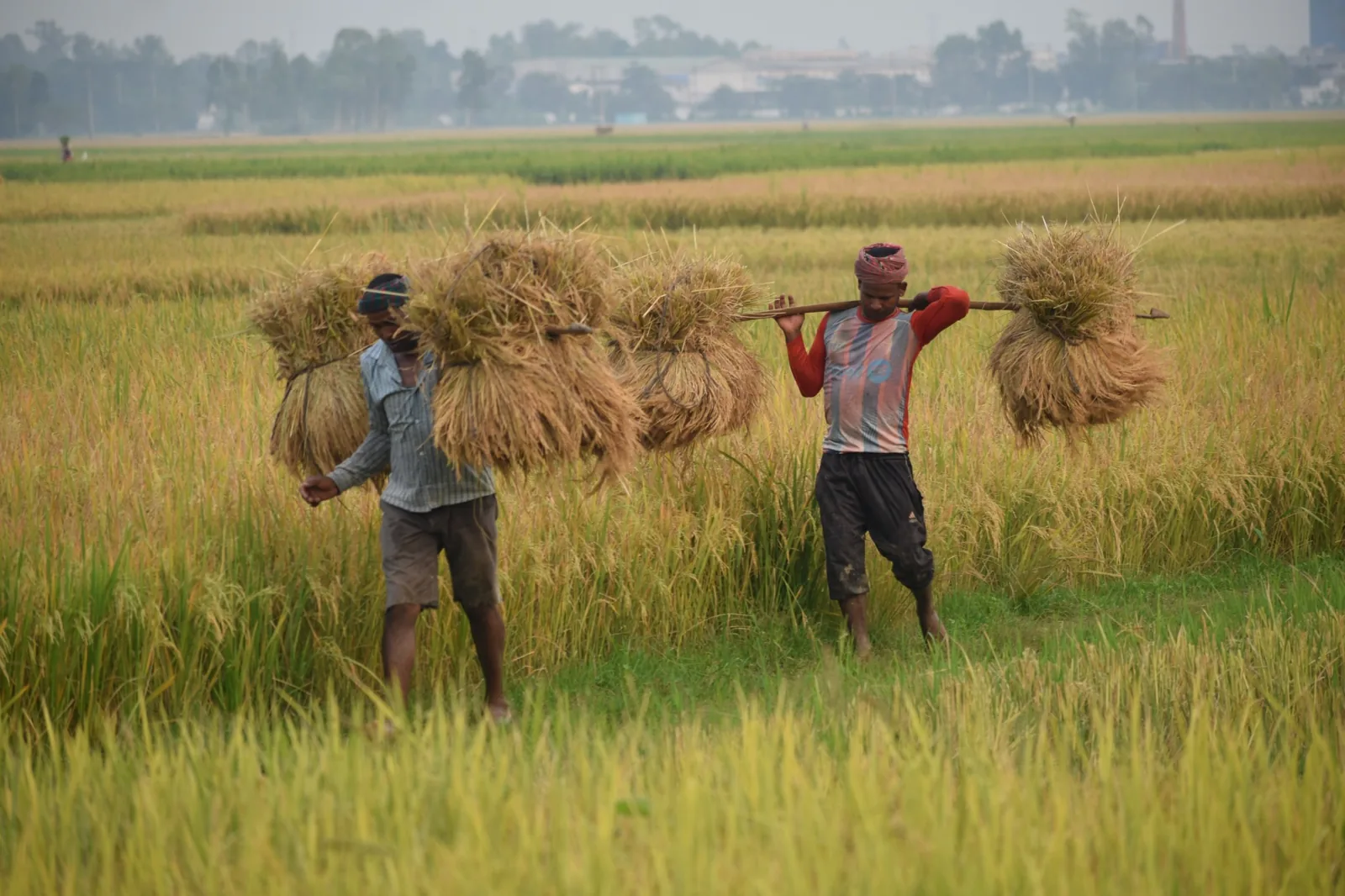
Solar-system size, water source, command area, site permissions and final quantities will be confirmed through field survey and engineering before installation. Documentary photographs are contextual Bangladesh images and do not depict Harvest Ready participants or sites.
Image credits: Mohammad Shajahan / Wikimedia Commons, CC BY-SA 4.0; Helena Wright / Wikimedia Commons, CC BY 2.0; A S M Jobaer / Wikimedia Commons, CC BY-SA 4.0; Azimronnie / Wikimedia Commons, CC BY-SA 4.0; Zaheed Sarwer Khan / Wikimedia Commons, CC BY 4.0.