
Mangrove roots beside tidal water
Sundarbans tidal landscape.

Open for funding · Sundarbans Guardian Cooperative · southwest Bangladesh

Recover plastic. Keep its value visible.

The first funded route follows recovered plastic from collection to processor acceptance and payment back to the cooperative.

Follow SGC-01

Regional context

Plastic reaches the Sundarbans by water.

Plastic moves through upstream markets, rivers and creeks before reaching mangrove edges. Collection is only part of the problem.

Once material moves on, its source, weight and value can become difficult to follow.

2.7 ttraced in nine months
A regional pilot has already shown that plastic can stay traceable here.

PRISTINE’s WasteX system recorded 2,667.65 kg of single-use plastic across ten upstream marketplaces, including Mongla Sadar, Baniashanta and Digraj, between August 2024 and May 2025.

Regional precedent · not an SGC result

Arannayk Foundation · WasteX traceability ↗
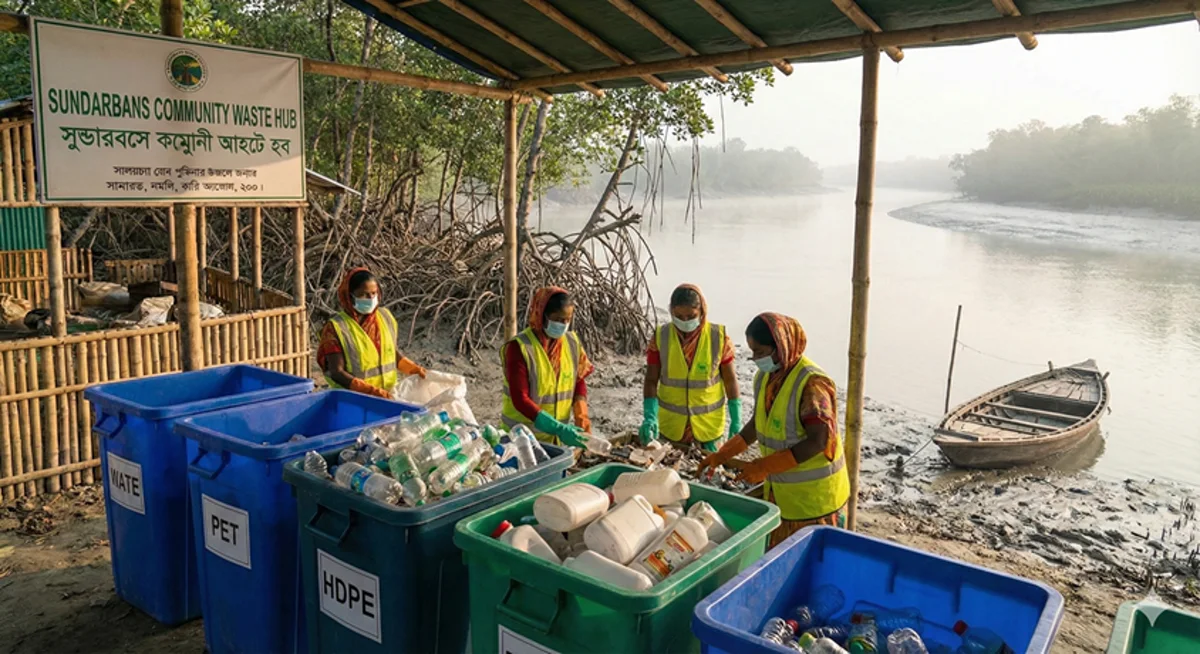
Community waste sorting beside a Sundarbans river
Representative sorting context · Sundarbans river system. Not SGC project evidence.
13 AUG 2026EPR

Bangladesh policy shift

Responsibility now follows plastic after sale.

Bangladesh’s 2026 guidelines place post-use responsibility on listed manufacturers, importers and brand owners. SGC turns that policy shift into a field test: one recovered lot, one processor receipt and one cooperative payment record.

SGC-01

The same lot, all the way through.

SGC-01 is the working record for the lot. It starts at recovery and stays with the material until the sale is paid.

01 / ORIGIN

Record what was recovered.

Record the material, where it came from, its condition and who recovered it.

Material
Plastic category and exclusions
Source
Recovery area and collection window
Recovery group
Named cooperative or collection operator

Before it moves: record source, condition and starting weight.
02 / CUSTODY

Know who has it next.

At each handoff, record who received SGC-01, what weight left, what arrived and what was lost or excluded.

Holder
Named custodian at each handoff
Dispatch
Condition and weight when it leaves
Receipt
Incoming record linked to SGC-01

Each new record stays linked to SGC-01.

03 / ACCEPTANCE

Record what the processor accepts.

The processor records accepted net weight, deductions, rate and when payment is due.

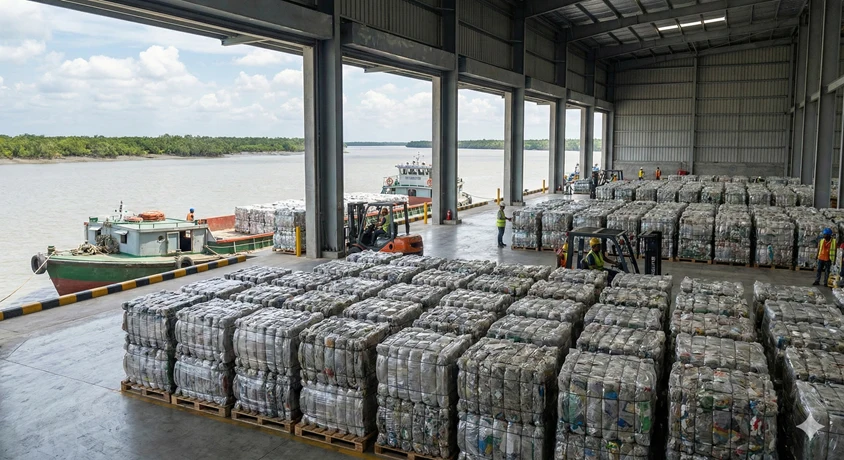
Compressed plastic bottle bales at a material-handling warehouse
Representative processor handling context. No SGC processor or accepted project lot is confirmed.
Specification
Material requirement, condition and excluded waste
Acceptance
Received weight, deductions and accepted net weight
Terms
Rate, receipt, payment timing and rejection treatment

Rejected or deducted material stays on the SGC-01 record.

04 / SETTLEMENT

Trace the payment back.

The sale closes when processor payment, route costs and member payments can all be matched to SGC-01.

Sale record
Accepted quantity, rate and processor receipt
Route costs
Recorded costs or reserve applied to SGC-01
Member payment
Payment reference linked to the accepted lot

The same record shows what was accepted, what it sold for and what the cooperative paid out.

What funding tests

Run the route before buying permanent assets.

The first funded route should show whether the lot can be followed, whether a processor will accept it on written terms and whether the payment can be matched back to the cooperative.

The lot stays identifiable.

Source, custody and recorded losses stay with SGC-01.

The processor writes down what it accepts.

Specification, deductions, accepted weight, rate and payment timing are recorded.

The payment can be matched back.

Sale proceeds, route costs and member payments are reconciled against SGC-01.

Next capital decisionRun one complete route, reconcile the records, then decide what infrastructure is actually needed.

Where the money goes

How the first route is funded.

Indicative share of funding by use.

30%Environment

Recovery points, handling controls and local environmental checks.

15%Health

Safe handling, PPE, sanitation and incident controls.

20%Education

Training for material identification and lot records.

35%Livelihood

Collection, processor acceptance and cooperative payment records.

Funding decision

Fund the first route from recovery to payment.

Follow one recovered lot through sale. If the records reconcile, use what we learn to decide what permanent infrastructure comes next.

Fund the first route