
Coconut Coast Open for funding · Bagerhat
Keep Bagerhat'scoconut treesproductive.
New trees matter. So do the ones already standing.
Proposed first-phase scale10,000new saplings
Existing trees cannot wait for them to mature.
Crop Intelligence · Coconut · 2024–25
#1 · Bagerhat22,556 trecorded production
Recorded area386.8 haBagerhat · 2024–25
National share5.7%of recorded district production
Bagerhat leads a distributed coconut record.
Bagerhat ranks first with 22,556 tonnes, yet represents only 5.7% of recorded district coconut production. The top five districts together account for 25.8%.
Evidence boundary. BBS records 22,556 t across 386.8 ha for 2024–25. DAE figures reported in July 2026 cite 33,601 t across 3,678 ha. Source, year and definitions differ; neither series is the project baseline.
First-upazila tree stock, participant demand, buyer terms and project performance still require field measurement.
One coconut environment
Trees need care, tools and a buyer.
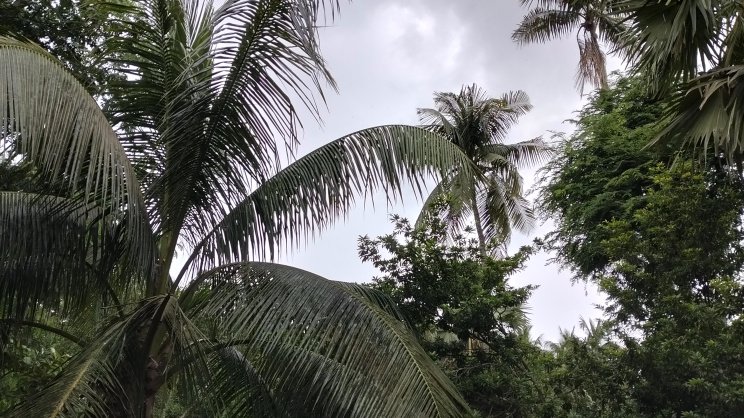
The next tree has to start well.
What has to work
Planting material, site fit and early care.
What remains unproven
The programme cannot establish a repeatable replacement pathway for ageing or damaged trees.
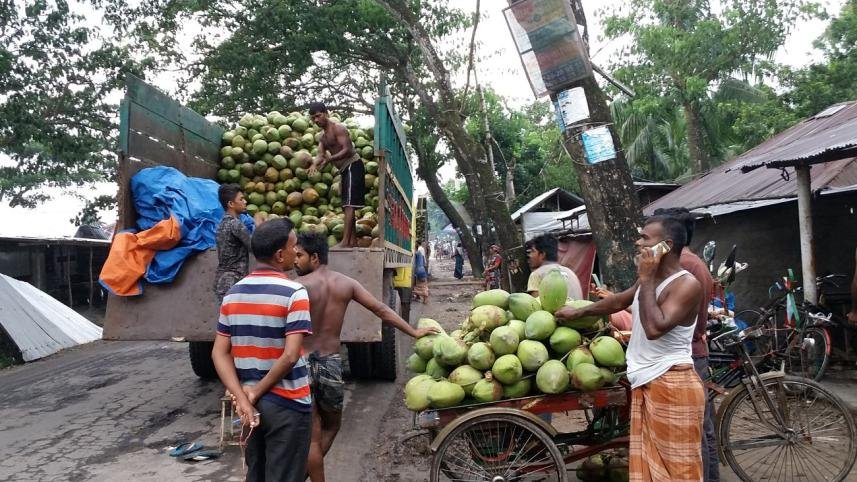
First two-year phase
Test the four conditions in the first two upazilas.
The first phase tests these conditions together in the first two upazilas.
24 monthsFirst two upazilas · to confirm
Proposed first-phase targets
What your investment buys.
- 10,000New coconut saplings
- 130Mechanised tools125 climbers · 5 de-huskers
- 5,000Farmers trained
- 130Rural micro-entrepreneurs
Before the first phase starts
Four operating facts still need field confirmation.
Confirm the first two upazilas, participant register, existing tree stock and new-planting allocation.
Test demand, pricing, utilisation, maintenance and operator viability for climbing and de-husking.
Confirm fresh, mature and processing demand through written buyer requirements and repeat transactions.
Complete activity costing, procurement, safety, participant safeguards and measurement ownership.
Allocation
Where the money goes.
Indicative reference mix.
Environment35%
Planting + cultivation
Livelihood30%
Tools + buyer route
Education20%
Skills + training
Health15%
Operator safety
Proposed field partnerSAF Bangladesh
Open for funding · Bagerhat
Fund the first operating phase.
Request funding brief24 months · first two upazilas to confirm