
IN PROGRESS · GAIBANDHA · FOUR CHARS
Four chars.Two projects.Work underway.
Site and baseline work is preparing the ground for essential services and livelihoods across four chars.
See current workPROJECT 01Char UdayanKamarjani + Mollarchar
PROJECT 02Adaptive Eco CharFazlupur + Fulchhari
CHAR CONTEXT
Infrastructure has to work where the river keeps rewriting access.
EcoChar spans four riverine chars in Gaibandha. The two projects combine storage, solar energy, water, transport, growing support and local enterprise, while July implementation records keep land, baseline and engineering readiness ahead of construction claims.
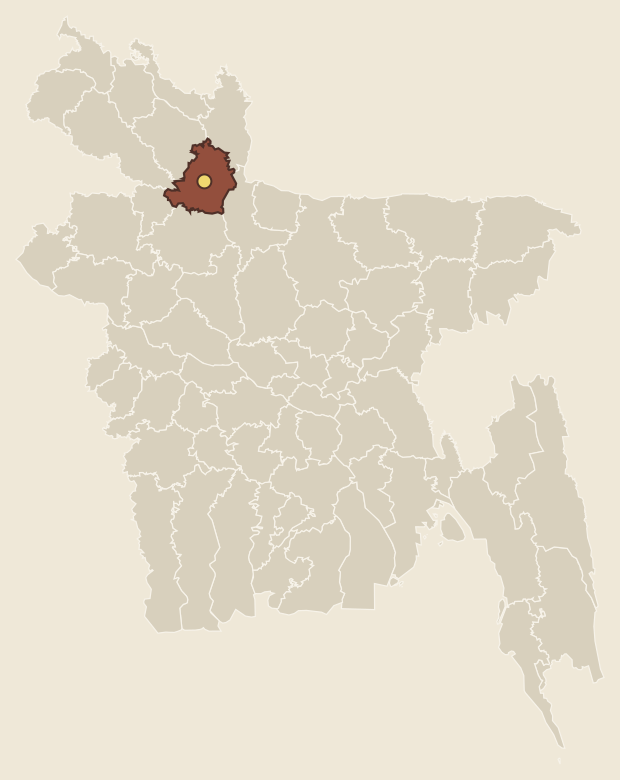
Gaibandha district · 2024–25 BBS production records
CROP INTELLIGENCE · GAIBANDHA
The surrounding production base is substantial.
District production does not establish EcoChar participant crop mix, char-level production or project outcomes.
Open Gaibandha in Crop Intelligence →PLANNED DELIVERY
The two projects move on separate schedules.
Char Udayan
Kamarjani + Mollarchar · Jul 2026 to Dec 2027 · 1,000 households to reach
2Udayan HubsZECC + digital connectivity
4Solar irrigation systems
Hybrid boatsCargo + rescue transport
Farm toolsMachinery + shellers
ConnectivityStarlink + solar power
15 batchesTechnical trainingLivelihoods + market access
Adaptive Eco Char
Fazlupur + Fulchhari · May 2026 to Mar 2028
2 + 2Resilience hubs + eco-storage
200Household solar systems
2 + 2Water purification + digital health
600 peopleClimate-smart growingSandbar crops + homestead gardens
150 householdsLivestock support
200 womenChar enterprises
IMPLEMENTATION · JULY 2026VERIFIED · 31 JULY 2026
Land, baseline and engineering come first.
CHAR UDAYAN · GAIBANDHA SADAR
Site certainty comes before procurement.
- In place
- Implementation plans prepared; four potential sites assessed; consultation held; baseline questionnaire finalised; vendor BOQs collected.
- Holding work
- Final site confirmation, baseline completion, heavy rain, erosion exposure and incomplete land documents.
- Next step
- Complete the baseline, confirm the hub site, verify beneficiaries and move procurement forward.
ADAPTIVE ECO CHAR · FULCHHARI
Selected sites still have to clear land and engineering.
- In place
- Sixteen consultations completed; infrastructure sites selected; vendor BOQs collected; regional crop assessment completed.
- Holding work
- Land transfer, engineering, baseline and beneficiary selection, flood-safe land availability and land-use documents.
- Next step
- Complete land transfer and baseline work, finalise engineering and launch procurement.
JULY FIELD RECORD
July records show what is complete and what remains open.
Four potential hub sites were assessed.
- Implementation, action and technical site-selection records were prepared.
- Four potential sites were assessed for two Udayan Hubs.
- Community consultation was documented and the baseline questionnaire was finalised.
Infrastructure sites were selected.
- Sixteen consultations were documented across the two project unions.
- Infrastructure sites, vendor BOQs and the regional crop assessment were recorded.
- Baseline and beneficiary selection were underway.
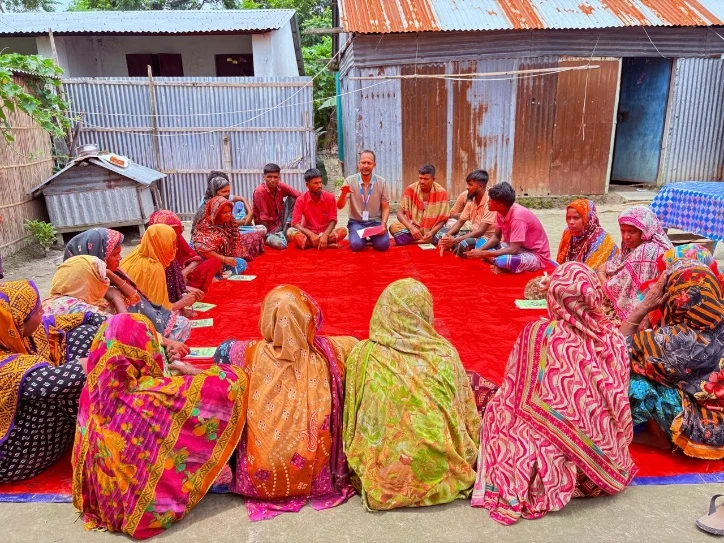
Community consultation.
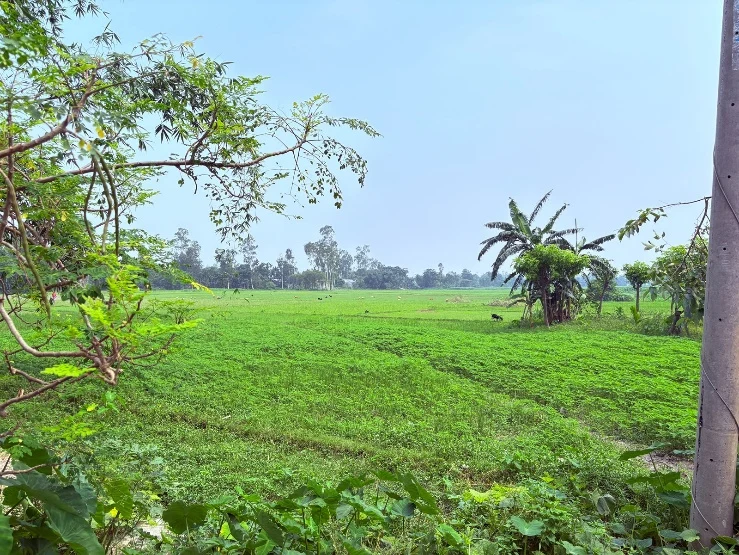
Land condition informed site screening.
Each project keeps its own field record.
Photos shown here are from Char Udayan, July 2026.CHAR UDAYAN · ALLOCATION
Where the funding goes.
Adaptive Eco Char is funded separately and retains its own allocation.
- Capital assets
- 66.2%
- Hubs, irrigation, boats, machinery + connectivity
- Programme activities
- 27.3%
- Training, enterprise support, drills + monitoring
- Overhead + HR
- 6.5%
- Project management
CURRENT CONSTRAINT
Flood-safe sites narrow the options.
Flood-safe sites and clear land arrangements come before construction. Heavy rain and incomplete documentation slowed site work in July; erosion and scarce elevated land narrowed the options.
NEXT
Close the remaining site work.
Confirm land. Complete the baselines. Move procurement forward.