First cluster to be selected with growers and existing food-safe processing providers around one mango season.
01 / Field Systems / Concept note
Rajshahi & Naogaon · Twelve months proposed
Operating support sought · No capital purchases
Mango After Harvest
Give more of the mango harvest a market through practical handling and food-processing skills taught inside existing north-western facilities.
Explore the programme
Proposed Cultivera × PPRC collaboration

Why handling matters
What happens after picking matters
The aim is to make the next step in the mango’s journey something local people can do well.
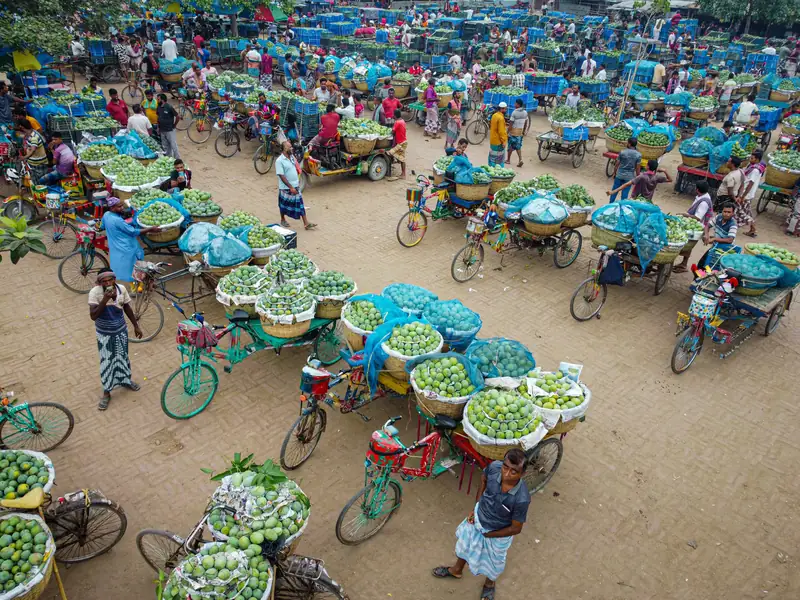
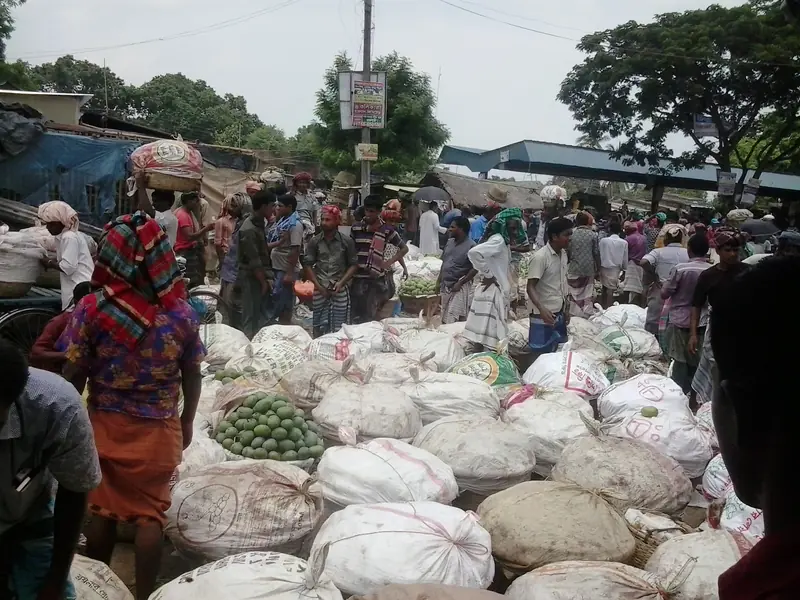
Mangoes move quickly from orchard to market. Grading, handling and the short harvest season all affect what a farmer can sell. Yet the practical skills needed to preserve quality and process fruit are not always available where it is grown.
Mango After Harvest would bring smallholder growers, disadvantaged young people and women into practical training with experienced local processors. The work begins with the facilities and businesses already operating in the Rajshahi and Naogaon region, without building a new processing plant.
Research context · PPRC’s 2026 study of youth economic engagement identifies fruit processing and local market services as opportunities in the north-west. These are leads from regional consultations, not measured project results.

Cultivera Atlas · Evidence
Place, crop and season
District context for a proposed programme, not a confirmed operating site or delivered result.
1 of 3 · Place
Supervised training takes place inside existing local processing rooms hired for teaching windows rather than constructing new plant capacity.
02 · Crop evidence
What the records show
Bangladesh mango value-chain research documents handling, quality and market coordination challenges. District figures do not provide a reliable comparison for this programme, so no production total or loss percentage is claimed.
Practical responseFruit grading, safe handling and supervised processing in existing facilities.
Research: Wageningen University & Research, 2021. Programme outcomes require local baseline assessment.
03 · Seasonal guide
When learning should happen
Training will follow local harvest dates and the teaching windows available at nearby processors. The first operating calendar will be agreed with growers before delivery.
- PrepareQuality and hygiene training
- HarvestConfirm local variety dates
- PractiseSupervised handling and processing
- Follow upVerify skills and work
Planning sequence, not a district seasonal forecast. BAMIS crop-calendar catalogue.
Proposed work
Handle. Process. Connect. Follow through
Learning follows the fruit from orchard sorting through supervised food-safe processing and verified work opportunities.
Quality decision sequence · Fresh → Grade → Handle / Process → Follow through
Rajshahi & Naogaon · Existing food-safe facilities
Handle.
Farmers and trainees learn to sort, grade and handle fruit safely, with attention to what different buyers actually accept.
Process.
Existing local facilities are hired for supervised demonstrations in safe drying and suitable mango products, covering hygiene and quality control.
Connect.
Trainees meet experienced processors and service providers. Farmers learn how grades, quality requirements and selling terms affect their options.
Follow through.
Practical assessments and subsequent paid work are recorded. Farmer practices and feedback are followed beyond the classroom.
The available record
What the research tells us
PPRC’s October 2026 youth economic engagement study reports local interest in fruit processing and practical enterprise skills in the north-west.
Wageningen University & Research documents mango-chain handling, post-harvest quality pressure and market constraints in Bangladesh.
Programme-specific losses, hiring demand and subsequent paid work will be assessed locally during baseline work rather than assumed in advance.
Atlas reading · Climate and season
Harvest sessions run into the rains
The May–July teaching window sits on the monsoon's rising edge. Rain in the Rajshahi grid cell more than doubles from May to June, so drying and handling sessions need covered space.
Rajshahi
14Jan
11Feb
25Mar
57Apr
134May
285Jun
356Jul
265Aug
266Sep
120Oct
15Nov
4Dec
Rajshahi mean rainfall, May to July. Naogaon follows the same curve.
Open Rajshahi rainfallRipening and harvest in the nearest published BAMIS calendars, for the Rangpur and Dinajpur regions. The project agrees dates with growers while a Rajshahi calendar is unavailable.
Open the mango calendarDistrict mango records are open to explore. This page does not use them as a programme comparison.
Open mango recordsMonthly rainfall values
| mm | Jan | Feb | Mar | Apr | May | Jun | Jul | Aug | Sep | Oct | Nov | Dec |
|---|---|---|---|---|---|---|---|---|---|---|---|---|
| Rajshahi | 14 | 11 | 25 | 57 | 134 | 285 | 356 | 265 | 266 | 120 | 15 | 4 |
| Naogaon | 10 | 13 | 20 | 72 | 154 | 299 | 324 | 247 | 277 | 152 | 15 | 4 |
Rainfall: CHIRPS v3.0, Climate Hazards Center, UC Santa Barbara, via Cultivera Climate Atlas. Each value is the 1991–2020 mean for the single 0.05° grid cell containing the district reference point, not a district average. Crop calendars: admitted BAMIS calendars via Cultivera Seasons Atlas. Production: BBS Yearbook of Agricultural Statistics 2025 via Cultivera Crop Intelligence. Context for planning, not a forecast or a programme result.
Success measures · KPI plan
Five measures, one record
The first two months will establish starting conditions and realistic targets. These measures describe what would be checked, not results already achieved.
| Measure | Out of | Evidence | Reported | Category |
|---|---|---|---|---|
| K1Practical competenceLearners who pass an independent practical assessment in grading, hygiene and supervised processing. | Learners enrolled | Assessor score sheets | After each session block | Education |
| K2Food-safe practiceSupervised processing sessions that pass the food-safety checklist for moisture control, clean handling and safe storage. | Processing sessions held | Facility checklist and trainer log | Every session | Health |
| K3Handling on the farmParticipating growers who grade and crate fruit as taught at the next harvest. Buyer rejections are recorded separately. | Participating growers | Follow-up visits; buyer slips where shared | July and December | Livelihood |
| K4Verified paid workTrainees in paid processing work or self-employment, confirmed by an employer or buyer. Attendance never counts as work. | Learners who pass K1 | Employer or buyer confirmation | Three and six months after training | Livelihood |
| K5Who is reachedWomen and disadvantaged young people among the learners who pass K1. | Learners who pass K1 | Consented participant register | Each cohort | Education |
These are proposed measures, not reported results. Starting figures for participation, income and crop losses will be checked through local surveys.
Allocation · Percent only
Where the money goes
Proposed spending is grouped by the training and field activities it would support, using Bangladesh Bank CSR categories.
Health15%Education55%Livelihood30%
Environment & climate
0%No line is classed as climate spending. Any solar-drying demonstration is costed as instruction.
Health
15%Food-safety instruction, hygiene supplies and session checks.
Education
55%Trainers, assessors, short hire of existing facilities and teaching supplies.
Livelihood
30%Grower demonstrations, buyer sessions and paid-work follow-up.
- Primary CSR home
- Education · vocational training, §6.1.3
- Duration
- 12 months
- Reach
- Set at baseline
- Request
- Operating costs only
Planning allocation, in percentages only. Coordination, baseline and reporting are spread across the measures they serve, so no taka is counted twice. Amounts are fixed once quotes are confirmed, and the participating bank's Sustainable Finance Unit confirms each line's category. Bangladesh Bank CSR guidelines ↗
Programme support · Operating costs only
Fund the learning, not the factory
Bank CSR support would cover the people and activities that make the programme work: instructors, farmer outreach, training sessions, temporary hire of existing food-safe facilities, teaching materials, local travel and evaluation.
No dryers, factories, buildings, fixed installations or commercial fruit stock would be purchased with CSR funds.
Operating activities
- Instructors, food-safety trainers and practical assessors
- Short-term hire of existing food-safe processing facilities
- Farmer outreach, sorting sessions and local travel
- Baseline research, skills verification and outcome reporting
Policy context: Bangladesh Bank SFD Circular No. 01 (9 January 2022), sections 6.1.3 and 6.4.2. The participating bank determines the eligibility and classification of proposed operating costs.
Working together
Proposed roles and partners
Proposed programme geography: Rajshahi and Naogaon, with the first cluster selected alongside growers and local processors.
Cultivera
Organises the field programme, relationships with growers, processors and trainers, delivery coordination and reporting.
PPRC · Proposed research partner
Proposed research and community-engagement partner, supporting participant research, baseline work and learning from results. This partnership remains to be agreed.
Local practitioners
Farmer groups and experienced food-processing practitioners who deliver practical sessions in existing facilities, subject to agreement.